
Multi-Factor Authentication
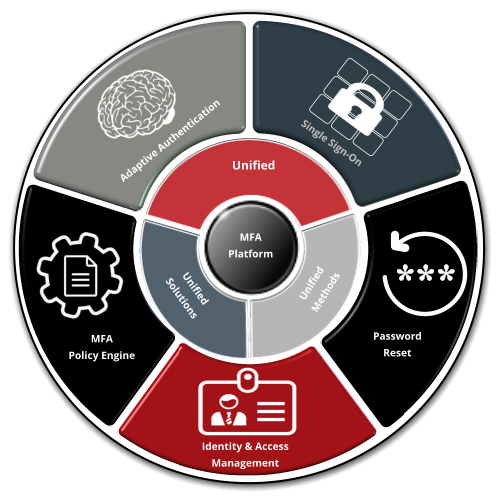
Deepnet DualShield is a multi-factor authentication system that unifies a variety of authentication methods, protocols, solutions and user experience in a single platform. In addition to the MFA functions, DualShield also provides self-service Password Reset, Single Sign-On (SSO), Identity & Access Management (IAM) and Adaptive Authentication. It is one of the most powerful and flexible multi-factor authentication system in the world.
Choose Quantity
$0.00
Product Details
Unified Authentication Methods
- OTP (One-Time Password) by SMS, email and voice call
- OOBA (Out of Band Authentication) by push notification, SMS and voice call
- OTP tokens, keyfobs and cards
- OTP apps, e.g., Deepnet MobileID, Google Authenticator etc.
- Grid cards, proximity cards and smart cards
- USB keys (FIDO U2F)
- Keystroke Dynamics
- Biometrics, e.g., Fingerprint, Face & Voice recognition
- Device Fingerprint, Device ID, Device DNA
Unified Authentication Solution
- VPN Login, e.g., Cisco ASA, Palo Alto SonicWall, WatchGuard, etc.
- Windows Login: AD domain login, RDP login
- MacOS Login
- Web Applications, e.g., Sharepoint, CRM, ERP, etc
- Cloud Service, e.g. Office 365, Google Apps, SalesForce, AWS, etc.
- Outlook Anywhere, Outlook Web Access, ActiveSync
Unified Authentication Protocols
- LDAP: commonly used to provide a directory service for storing user information and to verify user credentials, i.e., usernames and passwords
- RADIUS: a networking protocol that provides centralized Authentication, Authorization, and Accounting (AAA) services, commonly used by networking devices such as firewalls and VPN servers
- SAML: an open standard for exchanging authentication and authorization data between parties, in particular, between an identity provider and a service provider. Commonly used by web & cloud applications to provide single sign-on (SSO)
- FIDO: a set of security specifications for strong authentication including multifactor authentication (MFA) and public key cryptography (PKI). Commonly used to replace password with device based authentication.
- OATH: a set of open authentication standards, e.g TOTP ( Time-based One-Time Password) and HOTP (Event-based One-Time Password), which have become the de facto OTP supported by many multi-factor authentication products.